If you have spent any time on a pit wall, you know the sound of a team principal shouting for an "instinctive" call. As an analyst, that phrase always made my blood pressure spike. Racing isn’t about instinct; it’s about managing a system defined by noise, hardware limitations, and high-stakes variables. Recently, I’ve been reading about "uncertainty systems" through the lens of MIT Technology Review, and it struck me: the way these systems process ambiguity is exactly how the best endurance teams handle a 24-hour race.
We often talk about racing as if it were a linear progression of laps. In reality, it is a complex web of probability distributions. Let’s break down what these systems actually mean for the grid, and why your favorite team might be doing more math than you realize.

Probability Over Certainty: Ditching the "Perfect Lap" Myth
The most dangerous trap in race engineering is the belief in a deterministic outcome. You have a car, a driver, and a track. You run a simulation, and you expect a result. But if your model doesn't account for the standard deviation of tire degradation, traffic patterns, and sensor drift, you aren't doing engineering; you’re writing fan fiction.
MIT Technology Review has highlighted how modern system design moves away from trying to eliminate uncertainty. Instead, it focuses on building robust systems that function *despite* it. In racing, this means moving from "what will happen" to "what is the probability distribution of outcomes given these parameters?"
Back-of-the-Envelope: The Pit Stop Window
Let's run a quick sanity check. Suppose you have a race remaining with 45 minutes of fuel. A simple deterministic model might say, "Pit in 40 minutes." https://varimail.com/articles/the-geometry-of-the-pit-wall-how-to-spot-a-strategy-race/ But a probabilistic system looks at fuel consumption variance—based on traffic and engine mapping—and realizes that while the mean is 40 minutes, the 95% confidence interval for "safe" fuel sits at 37 minutes due to potential full-course yellow (FCY) conditions. If you wait until 40, you gamble. If you pit at 37, you trade a slight loss in track position for a massive reduction in the risk of running dry.
The Monte Carlo Principle in the Garage
If you want to understand how a pit wall operates under pressure, look up the Monte Carlo principle. It’s the computational backbone of modern strategy. Instead of calculating one "best" race scenario, the software runs 10,000 simulations of the race remaining, varying inputs like pit stop times, tire deg, and probability of safety cars.
These simulations don't give you a single answer. They give you a heat map of outcomes. You aren't choosing the "best" strategy; you are choosing the strategy with the highest probability of a podium finish relative to your risk appetite. When platforms like MrQ use probability to manage their outcomes in gaming, they are using the same foundational logic we use to decide whether to double-stint the left-side tires at Spa.
Strategy Type Methodology Risk Tolerance Deterministic Linear Projections Low (expects perfection) Probabilistic Monte Carlo Simulations Managed (risk/reward ratio)Note: This table is website a partial comparison. It ignores the human element—the driver's feedback—which acts as a "live" filter on the raw mathematical output.
Telemetry and Data Density: The Applied Sciences View
Data isn't just a volume game. As noted in papers found in Applied Sciences (MDPI), the real challenge in sensor integration is signal-to-noise ratio. You can have 500 sensors on an LMP2 car, but if your data density is so high that your system can’t filter out the vibration-induced noise, you’re just looking at a screen full of static.
Effective system design relies on data thinning. We need to feed the strategy engine clean, processed data. If the telemetry shows a sudden drop in brake pressure, is it a failure, or is it a momentary sensor glitch caused by a curb strike? The system design must account for this ambiguity. We use rolling averages and outlier detection to prevent the strategy software from triggering a "panic pit stop" based on a single faulty data packet.
Real-Time Decision Making: The Pit Wall Struggle
This is where the theory hits the asphalt. When a car goes off track, the "uncertainty system" is suddenly flooded with new variables. You have to re-run your Monte Carlo distributions in seconds, not hours.
This isn't just about the software. It’s about the hierarchy of information. You have:
The Raw Telemetry: High-frequency, noisy. The Derived Insights: Fuel calc, tire temps, gap projections. The Strategic Output: The "Pit or Stay Out" command.If the data architecture is poor, the team relies on "instinct"—which is really just a subconscious heuristic based on past trauma. A well-designed system, however, provides the strategist with a clear visualization of the "Decision Frontier." It shows: "If we pit now, we have a 60% chance of clearing the GTD traffic. If we wait, that probability drops to 40%." That isn't a vague, "game-changing" insight. It’s actionable data.
Why "Uncertainty" is the Engine of Strategy
Many fans think the fastest car wins. In reality, the team that manages the distribution of "unlucky" events better than their competitors wins. We aren't trying to eliminate the unexpected; we are trying to ensure that when the unexpected happens, we have already modeled for it.
When you see a team decide to pit under a VSC (Virtual Safety Car) that hasn't officially been called yet, you aren't witnessing a miracle of clairvoyance. You are witnessing a team that has already performed a sensitivity analysis on the probability of a yellow flag and determined that the cost of acting early is lower than the potential gain of the VSC advantage.
Final Thoughts on System Design
The lessons from MIT Technology Review and the academic rigor found in publications like Applied Sciences (MDPI) aren't just for robotics or financial modeling. They are the new frontier of motorsport. We are moving away from the era of the "legendary strategist" who works on gut feel and toward the era of the high-throughput, uncertainty-aware system.
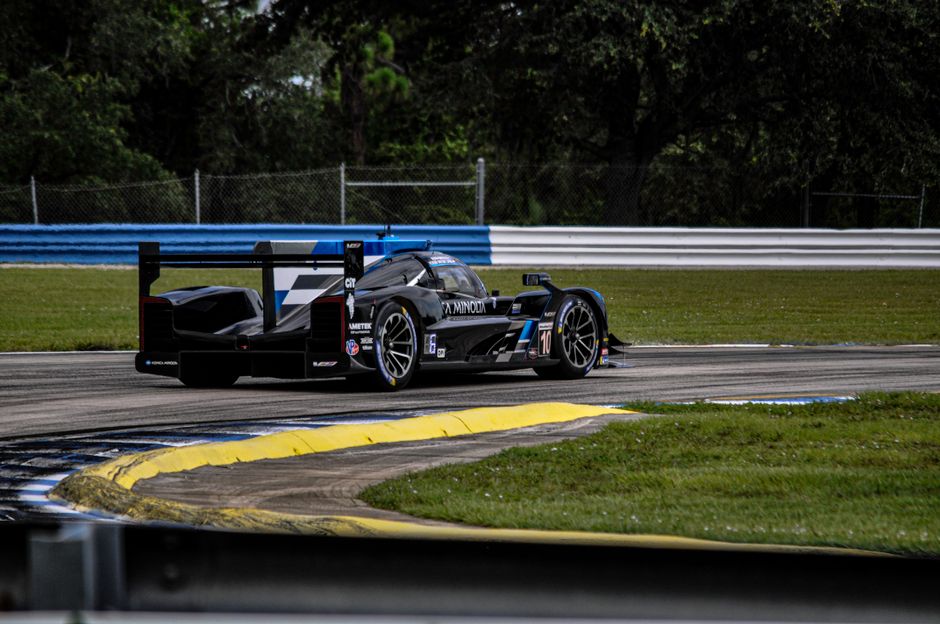
If you're looking for the edge, stop looking for a "game-changer"—a term that usually masks a lack of real understanding. Instead, look for the teams that are investing in better simulation density, faster telemetry processing, and a deeper respect for the mathematics of probability. That is where the race is actually being won.